
About Piece of Christchurch
The writing here was based on information collected during the development of this collection in 2011-2012.
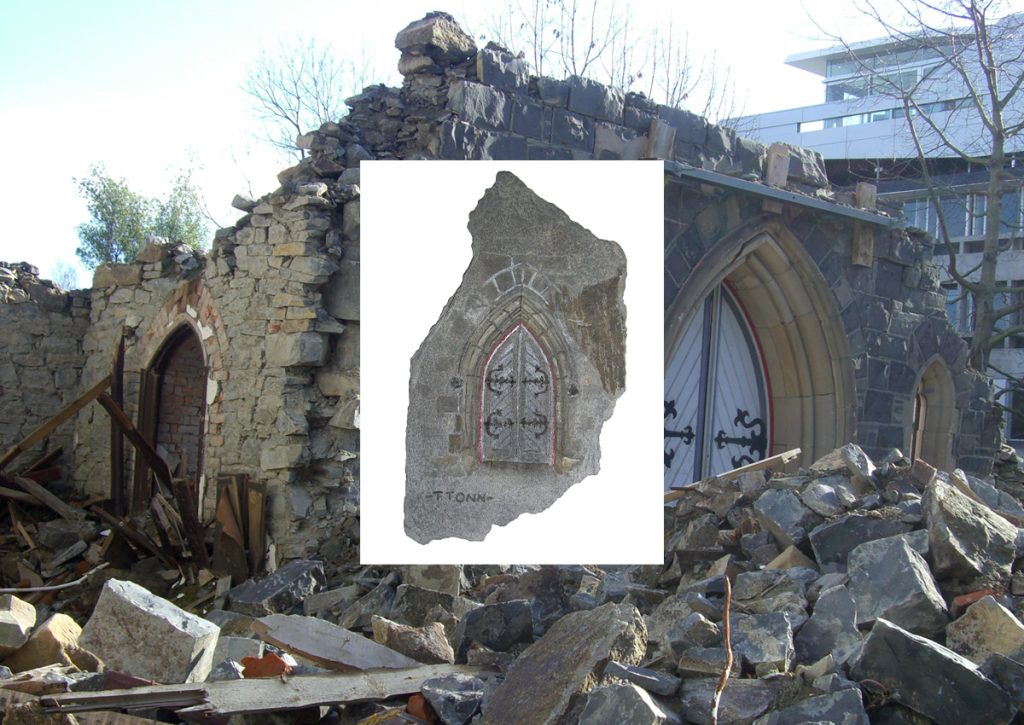
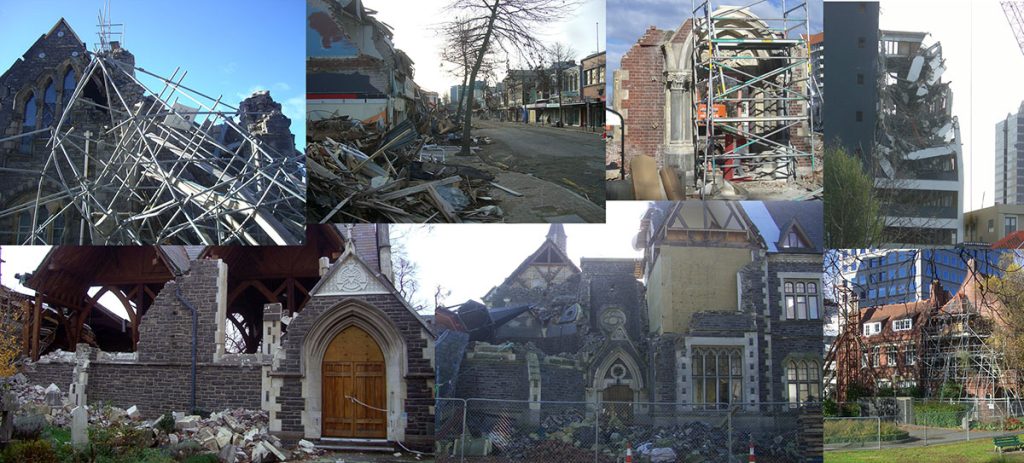
Christchurch City is well known for its English heritage and has always won the hearts of visitors as New Zealand’s Garden City. When the earthquakes occurred, they destroyed many of the historic centre’s stone buildings and changed its character forever.
After the February 22, 2011, earthquakes, the Christchurch City Centre was totally unrecognisable. I still remember leaving work on my bicycle to see if everything was OK. As I went through the city centre, the sirens were very loud, as expected. There was a strong smell of gas, and many people appeared frightened and in shock. On Fitzgerald Ave near the Avon River, the road was impassable. The more I saw, the more I realised how lucky I was that my office wasn’t in downtown Christchurch.
Buildings and our memories of them became a common topic of conversation for many people. I started a collection of broken pieces of buildings, keeping them on my windowsill as a memory of what they once were. Until one day, I decided to infusing them with my memories by painting them.
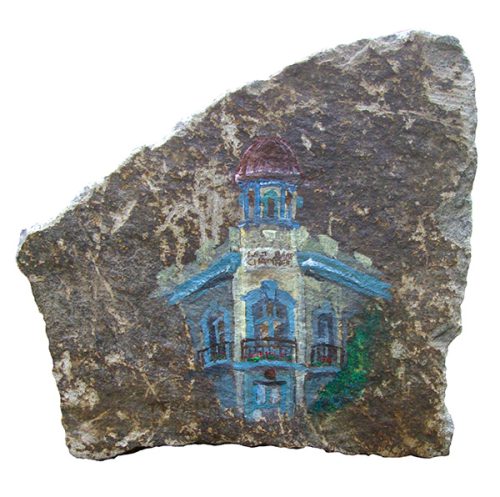
ANZ Bank Chambers
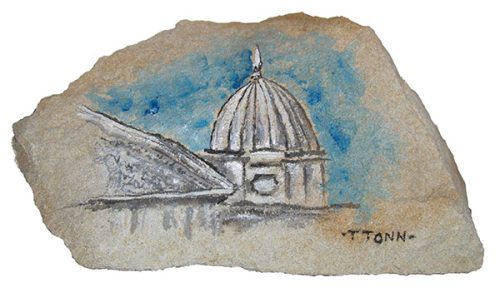
The ANZ Bank Chambers is Edwardian in design and was built in 1915. The chambers’ style matches the neighbouring ANZ Bank building, built in 1905. It was one of Christchurch’s most iconic copper domes, located on the corner of High Street and Lichfield Street.
It is believed the bank had plans drawn up for the chambers, but the elderly owner of the house on the corner refused to move. The plans were put aside until his death. When he died, they built his house and built the ANZ Chambers.
The heavy dome came crashing down during the February 22 quake, and the police are investigating whether it was stolen for scrap metal.
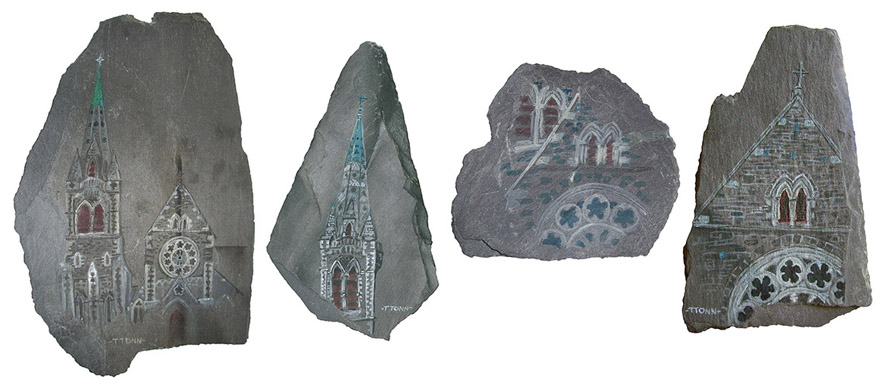
Christchurch Cathedral
The Anglican Cathedral of Christchurch in the city of Christchurch, New Zealand, was built in the second half of the 19th century.
The origins of Christchurch Cathedral date back to the plans of the Canterbury Association, which aimed to build a city around a central cathedral and college in the Canterbury Region based on the English model of Christ Church, Oxford. Henry John Chitty Harper, the first Bishop of Christchurch, arrived in 1856 and began to drive the cathedral project forward. In 1858, the project was approved by the diocese, and a design was commissioned from George Gilbert Scott, a prolific British architect who was known for his Gothic Revival churches and public buildings (he later went on to build St Pancras railway station in London, England, and St Mary’s Episcopal Cathedral in Edinburgh, Scotland). Scott himself never visited Christchurch, but handed over the oversight of the project to Robert Speechley.
The Canterbury Region has experienced many earthquakes over the years, and like many buildings in Christchurch, the cathedral has suffered varying degrees of earthquake damage. 1881 – A stone was dislodged from the finial cap, immediately below the terminal cross, by an earthquake in late 1881, within a month of the cathedral’s consecration.
1888 – Approximately 8 metres of stonework fell as a result of the 1 September 1888 North Canterbury earthquake. The stone spire was replaced.
1901 – The top of the spire fell again as a result of the 16 November Cheviot earthquake. This time, the stone construction was replaced with a more resilient structure of Australian hardwood sheathed with weathered copper sheeting, with an internal mass damper. The repairs were funded by the Rhodes family.
2010 – The 4 September 2010 Canterbury earthquake caused some superficial damage, and the cathedral was closed for engineering inspections until 22 September 2010, when it was deemed safe to re-open. Some further damage was sustained in the “Boxing Day Aftershock” on 26 December. The 6.3-magnitude earthquake on 22 February 2011 left the cathedral damaged and several surrounding buildings in ruins. The spire that had withstood damage in the September 2010 quake was completely destroyed, leaving only the lower half of the tower standing. The Cathedral suffered further significant damage on 13 June 2011 from the 6.3-magnitude June 2011 Christchurch earthquake with the rose window in the west wall falling in and raised the question of “…whether the cathedral needed to be deconsecrated and demolished”.
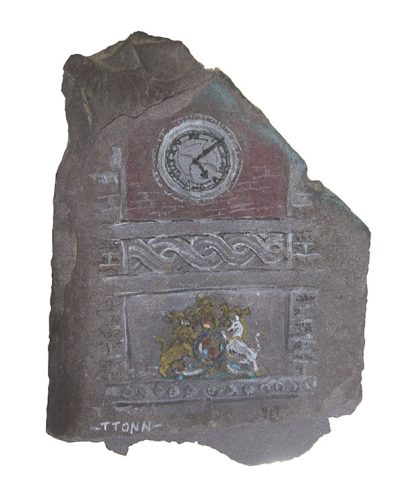
The Chief Post Office
These days, the Chief Post Office serves as the main Information and the Visitors Centre has Starbucks as a ground-floor tenant and provides some office space on the upper floor. The structure is registered with the New Zealand Historic Places Trust as a Category I heritage building.
The building originally housed the postal department as well as other Government and administration offices. In 1881, New Zealand’s first telephone exchange was installed in the building. The building was extended westward in 1907 by adding a third gable; up until that point, it had two symmetrical façades. The extension was designed and supervised by Burrows. When the new Government Building opened at the eastern end of the Square in 1913, the postal services remained, and the building became known as the Chief Post Office.
In the 1930s, the post office was threatened by demolition, as more space was required. Construction of a new post office didn’t start until 1989, immediately to the south of the existing building. The seven-storey building dominates and impairs the historic structure, and parts of the old building had to be demolished to make way for the high-rise.
Reputed to be a replica of London’s Great Clock of Westminster, a working, free-standing, four-faced turret clock was installed in 1879 within a clock tower. Underneath the east-facing clock face is the Royal coat of arms of the United Kingdom. Notable for being unreliable, an electric clock was eventually installed to control the visible faces as slave clocks. While at one time it chimed on the hour and at the quarter hour, the clock became silent after the mechanisms were damaged in a 1980s fire.
The building suffered minimal damage in the 2010 Canterbury earthquake and only minor damage in the February 2011 Christchurch earthquake.
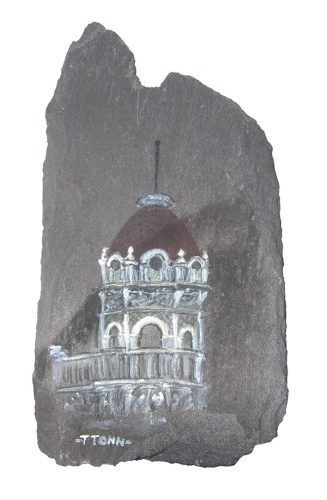
Regent Theatre Building
The ANZ Bank Chambers is Edwardian in design and was built in 1915. The building is registered as a Historic Place (Category 1). It was built for Percy Herman, the managing director of Warner’s Hotel, and Walter Cresswell, a local solicitor. It became known as the Royal Exchange Building after the Royal Exchange Assurance Company became one of its principal tenants. The Royal Exchange Building, built in 1905, was designed by the Luttrell brothers, Alfred and Sidney.
In 1930, the building was altered by J. S. Guthrie (1883-1946), a local architect, and reopened as the Regent Theatre. Guthrie retained the outer shell of the Royal Exchange Building and designed the interior, according to a contemporary newspaper article, to capture ‘the grandeur and charm of Old Spain’. To achieve a luxurious effect, Guthrie made extensive use of gilt, marble and mirrors throughout the interior. At the time the Regent Theatre opened, it had the largest screen in Australasia and the latest movie projectors. Unfortunately, the interior was destroyed by fire in 1979, but the building itself reopened two years later as a twin cinema complex.
The Regent Theatre Building makes a major contribution to the
townscape of Cathedral Square. It was the first major Edwardian building erected in the square and makes an interesting contrast to the neighbouring Victorian and modern buildings there. It was the last of six cinemas developed around Cathedral Square, and at the time it opened, it was considered the grandest theatre in the city. Before that, as the Royal Exchange Building, it was an important commercial building in the centre of Christchurch.
The 6.3 magnitude earthquake on Thursday, 3rd March, 2011, caused substantial damage to the building.
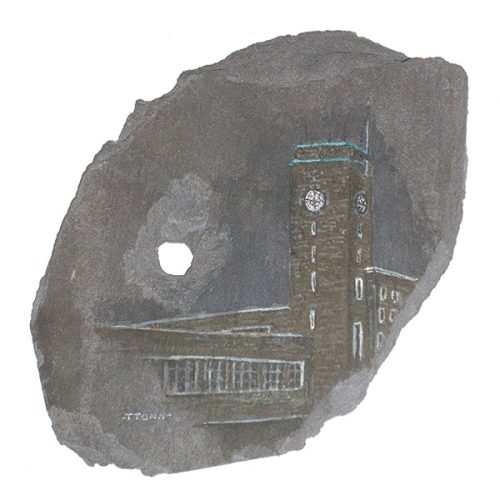
Christchurch Railway Station
A move to replace the 1887 station had begun as early as 1914, with architect’s drawings published in 1938 in the Department of Railways’ annual report. War delayed construction, and work was not begun until 1953, although the 1938 plans were followed with minor additions. The station was opened on 1 November 1960 by the Minister of Railways, the Hon. Michael Moohan (1899-1967). At the time, it was the largest building erected in Christchurch for some years, apart from the Princess Margaret Hospital. Architects were Gray Young, Morton & Calder; supervising architects, Manson, Seward & Stanton; builders, Wilkins & Davies (foundations), P. Graham & Son (superstructure). “The new Christchurch station is a magnificent symbol of the steady modernisation of New Zealand’s railway system, planned to meet the needs of a dynamic and vigorous community” – Christchurch city civic developments. Unfortunately, by the time it was opened, railway use was in serious decline, and the building was never used to its full potential.
On 4 September 2010, the building’s clock tower was damaged during an earthquake. The clock, frozen since the quake, is currently inoperative and cordoned off. The damage was found to be superficial, and with temporary repairs in place, a decision is pending on its future.
Further damage was sustained by the building in a subsequent earthquake on 22 February 2011. Its condition has been assessed and found to require a significant effort for repairs and strengthening. The cost of this work may determine the fate of the building, with the current owner, Science Alive! considering exiting the site and relocating to a new purpose-built building in the central city. The Hoyts cinema annex has also suffered earthquake damage and may have to be rebuilt.
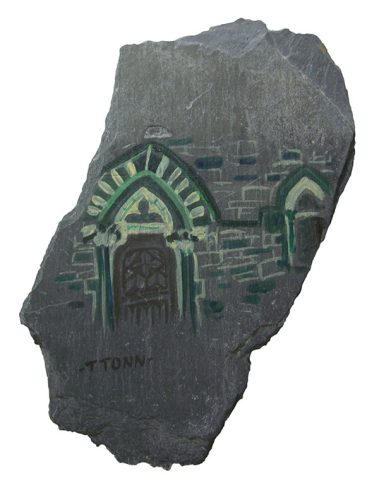
Canterbury Provincial Chambers
The Canterbury Provincial Council Buildings are the only purpose-built provincial government buildings still in existence in New Zealand.
This small cluster of historic buildings in central Christchurch is treasured by the city for both its historical importance and its beauty.
Canterbury Provincial Council Buildings (1858 to 1865) were designed by Benjamin Mountfort, Canterbury’s leading Gothic Revival architect. Although the style of the buildings looks back to Europe, they also assert their pride of place through the use of local stone and timber.
They sit beside the meandering Avon River, telling the story of Christchurch’s early European settlement.
The Timber Chamber, the Stone Chamber and their connecting corridors are closed to the public due to damage from the Canterbury Earthquake.
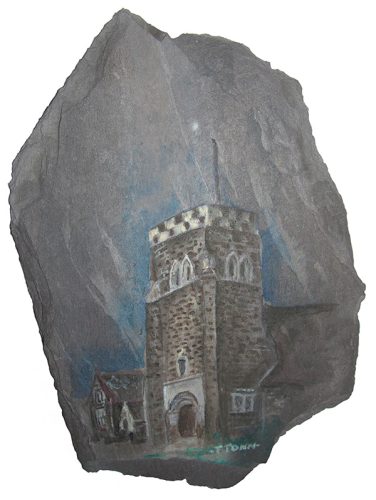
St Barnabas at Fendalton
The stone church of St Barnabas, picturesquely set amongst mature trees, is a notable feature of Fendalton Road. It was built to replace the 1876 timber church and consecrated in 1926 as a memorial to the dead of World War I.
The foundation stone was laid in 1925, with over 800 people attending the ceremony. (Interestingly, no children were present at the ceremony because of a nationwide infantile paralysis epidemic.) Mention was made at the ceremony that the church was to honour both the dead and the living who had fought in World War I. The church was completed by November 1926, and representatives of the army were present at the consecration ceremony.
St Barnabas is significant as one of the few churches erected in New Zealand as a war memorial. While church communities were among the most likely to erect memorials to the dead, it was far more common to have memorials erected within existing churches than to have the church itself built as a memorial. Maclean and Phillips, in their book on New Zealand’s war memorials, argue that the number of World War I church memorials reflects both the importance of religion to New Zealanders at the time and ‘the close involvement of the church in encouraging and supporting the war effort’. (Maclean & Phillips, 1990: 83)
The magnitude 6.3 earthquake that hit Christchurch on 22 February 2011 caused the already damaged St Barnabas Church to sustain considerable further damage, with new cracks around the west and east ends and adjacent to the tower. The old cracks on the north wall have become significantly larger.
It is apparent that the repair work will leave its mark on the building.
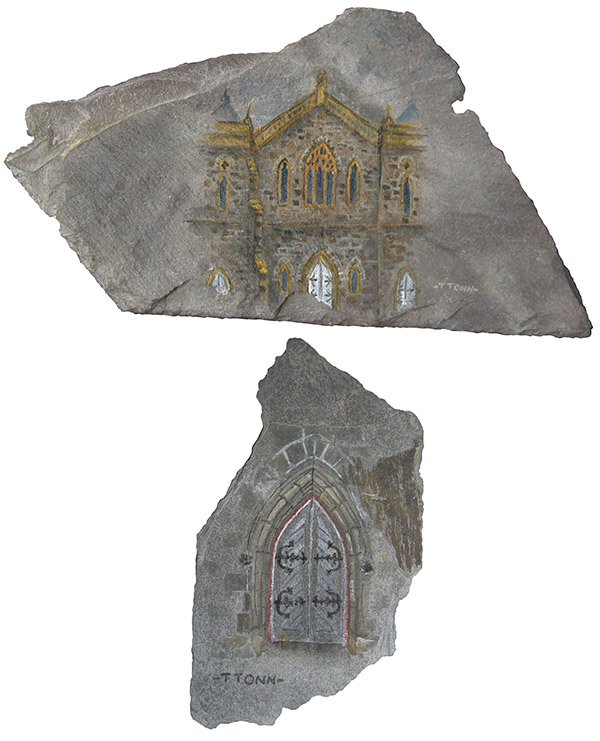
Durham Street Methodist Church
The Durham Street Methodist Church in Christchurch was the earliest stone church constructed in the Canterbury Region of New Zealand. It is registered as a “Historic Place – Category I” by the New Zealand Historic Places Trust.
The winning architectural firm, Crouch and Wilson from Melbourne, had entered a design in the Gothic Revival style in the 1863 competition. Local architect Samuel Farr, who had come to Akaroa in early 1850, came second in the competition and was engaged to supervise the construction. In early 1864, the foundation stone was laid by Samuel Bealey, who at the time was Superintendent of Canterbury Province. The building was officially opened on Christmas Day 1864, and Canterbury thus had its first church built of permanent materials. The stone used includes Halswell and Port Hills basalt and Charteris Bay sandstone. A gallery was added to the building in 1869, and a schoolroom was built next to it in 1875. A parsonage was subsequently erected facing Chester Street. In 1951, a Memorial Chapel was added, dedicated to those killed in both World Wars. On 2 April 1985, the church building was registered by the Historic Places Trust under registration number 3099 as a Category I heritage building. An atrium was built in 1987 to connect the church to the Aldersgate building next door, which houses offices for both the church and the Christian Methodist Mission.
The 1888 North Canterbury earthquake caused a spire in the southeastern corner to tilt, leading to its subsequent removal. The church and hall were severely damaged in the September 2010 earthquake and the aftershock the following Boxing Day. The building collapsed the following February in the February 2011 Christchurch earthquake while a team of eight workers from the South Island Organ Company were dismantling the organ, killing three of them.
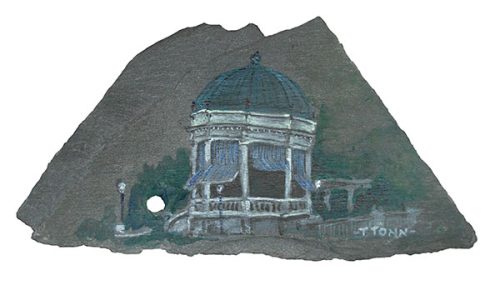
Edmonds’ Band Rotunda
These days, the Chief Post Office serves as the main Information and Edmonds’ Band Rotunda, the architectural heritage of Christchurch. 8.
The rotunda was donated to Christchurch by Thomas Edmonds. It was designed by Victor Hean, opening in November 1929. In 1989 it was converted into a restaurant. The rotunda is located on the banks of the Avon River just by Manchester Street.
Thomas Edmonds contributed significantly to the architectural history of Christchurch after the founding of the Edmonds Factory and Gardens in Ferry Road. The many buildings he substantially funded or donated to the city include: the Theosophical Society building in Cambridge Terrace, the Radiant Hall (now the Repertory Theatre) in Kilmore Street, the Band rotunda (now the Thomas Edmonds Restaurant) in Cambridge Terrace, the clock tower and telephone cabinet in Oxford Terrace, 16 lighting standards along Cambridge Terrace, and Bickerton Park on the comer of Wainoni Road and Avonside Drive in memory Theatre of his friend Professor Bickerton. Thomas Edmonds’ prolific donations were a result of his 50 years of business in Christchurch.
The rotunda building was badly damaged in the Christchurch earthquakes and the restaurant/cafe will not reopen.
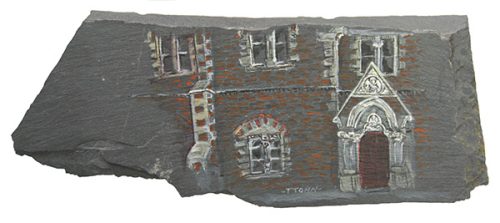
Old Christchurch Girls High School Building (Cranmer Square)
Christchurch Girls’ High School in Christchurch, New Zealand, was established in 1877 and is the second oldest girls’ secondary school in the country (Otago Girls’ High School is older). Christchurch Girls’ High School was established before Christchurch Boys’ High School (1881). The first headmistress was Mrs. Georgiana Ingle.
Christchurch Girls’ High School is known to many as Girls’ High and provides boarding facilities for 95 students from years 9 to 13 at Acland House, located 20–30 minutes walk away from school.
The school stands by the Avon River, on a site it has occupied since 1986. Previously, the area was occupied by a mill that was first build in 1861 by William Derisley Wood, which became known as the Riccarton Mill. The buildings burned down in 1974 and were subsequently demolished.
The school’s old location, which was renamed to Cranmer Centre, features prominently in the 1994 film Heavenly Creatures. Two students (Juliet Hulme and Pauline Parker, then known as Pauline Rieper) had a very close friendship in the years 1952–1954. Because their parents wanted to separate them because of suspected homosexuality, they both murdered Pauline’s mother. The crime and subsequent trial was world news.
Demolished in May 2011 following the February 2011 Christchurch earthquake.
Jubilee Clock / Victoria Clock Tower
The clock tower was commissioned by the Provincial Council and designed by Benjamin Mountfort. The tower was made in England and received in 147 packages in December 1860. The clock and tower were erected temporarily at the southern end of the Provincial Buildings but proved too heavy for the wooden tower at the southwest corner of the timber debating chamber. The iron tower stood for nearly three years in the courtyard of the Provincial Buildings while the clock itself was placed in the stone tower in Armagh Street and became the first “town clock”. Its face could not be seen but its chimes could be heard on a fine day up to two miles away.
After the abolition of the provincial government system in 1876, the clock was presented to the City Council (at the request of the then Mayor, C T Ick) in 1879 and stored in the City Council yard in Worcester Street. It was eventually erected on the corner of High / Manchester Streets in 1897 to mark the Diamond Jubilee of Queen Victoria’s accession – hence the name.
In 1930 it was moved to its present site in Victoria Street. Some restoration took place in 1978. Further restoration including structural strengthening, stonemasonry repairs, refurbishment of the clock, re-roofing and enhancement of the tower’s architectural details was carried out between June 2003 and February 2004.
The clock stopped at 12.50pm (the time of the big earthquake). It’s been through thousands of earthquakes and it’s still looking good. Though, the pointy bit at the top is looking a little bent out of shape.
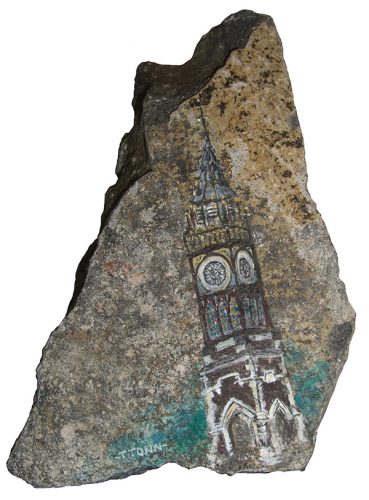
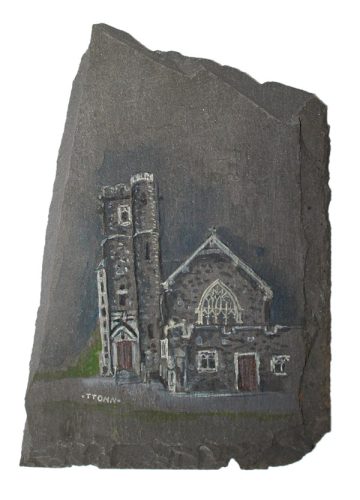
St Peter’s Church
In 1851 G. A. Selwyn, Bishop of New Zealand, licensed Octavius Mathias, Vicar of St. Michael’s, to be in charge of Riccarton. In 1852, for 600 pounds, Mathias purchased Rural Section 160 covering 200 acres. He conveyed 20 acres to the Anglican Church for St. Peter’s church, a vicarage and a Sunday School. Land was reserved for a burial ground and glebe.
In 1857, Church Property Trustees sought funds to be added to those already collected by Mathias. Isaac Luck designed a wooden church. Appropriately a church dedicated to St. Peter had, atop the spire, the symbol of a cock. Harper consecrated the church on Easter Tuesday, 6 April 1858.
B. W. Mountfort drew plans for a new stone church, the chancel being opened in spring 1876. Over a long period alterations were made and, in 1929 there was opened a ‘beautiful completed stone church’. Cecil Wood was the architect for much of this work.
St Peter’s Church at 22 Main South Rd, Upper Riccarton, Christchurch, is registered by the New Zealand Historic Places Trust as a Category II heritage building with registration number 1792.
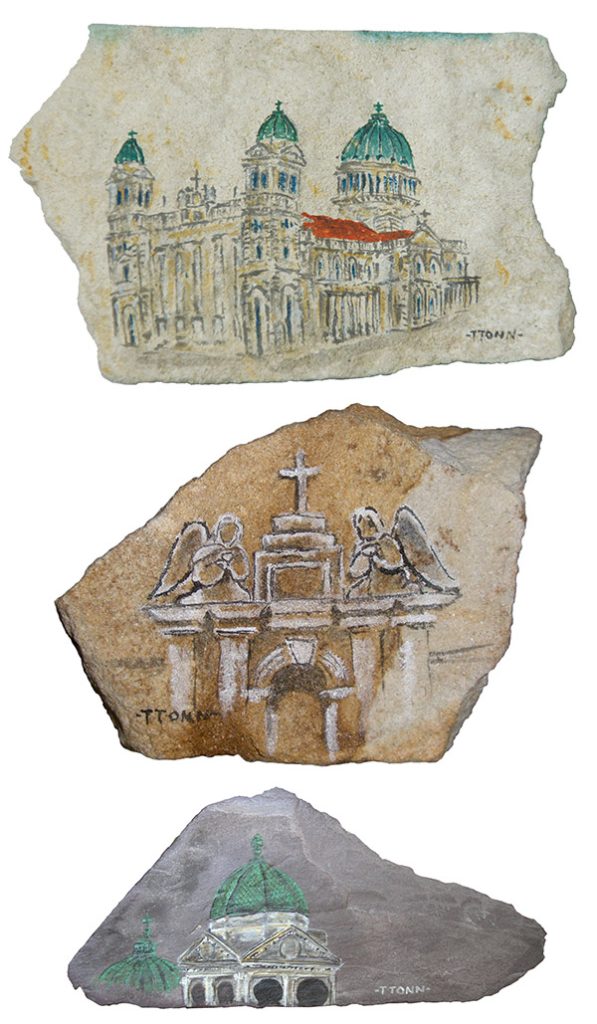
Barbadoes St Catholic Cathedral
“The Cathedral of the Blessed Sacrament is regarded as one of the finest examples of church architecture in Australasia. Its architect, Francis William Petre, specialised in the building of churches and achieved considerable recognition in the field of architecture and engineering. The Cathedral so impressed George Bernard Shaw that he hailed its architect as a – New Zealand Brunellesch.”
It is located at the Moorhouse end of Barbadoes street. The Cathedral was blessed and opened on the 12th February 1905, at a total cost of fifty two thousand pounds.
The dome of the Catholic Cathedral on Barbadoes Street will be removed after an inspection revealed another large earthquake could topple it completely.
Expert advisers met with diocesan personnel today to consider the badly damaged Cathedral of the Blessed Sacrament after an engineer’s report showed the cathedral’s dome is forcing weight-bearing structures outwards.
The building has been deemed too dangerous to enter since the September 4 earthquake and removal of the dome will be done by cranes at a distance from the site.
The Cathedral suffered further damage in the February 22 quake, with the two front towers collapsing and many stained glass windows breaking.
No decisions will be made about the future of the building until a detailed engineering report is generated after the dome has been removed.
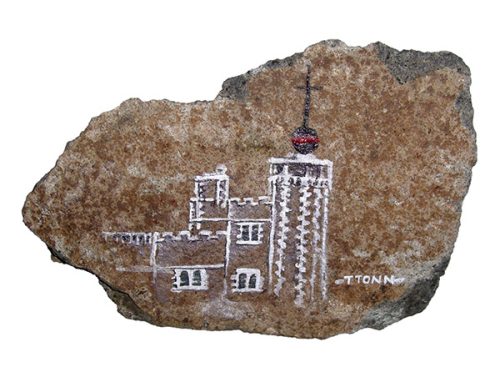
Timeball Station
Like a Scottish castle dominating the scenic port of Lyttelton, the Timeball Station is one of the few of its kind left in the world.
From 1876 to 1934, a ball dropped from its mast on its stone tower, signalling the time to ships in Lyttelton Harbour. Visual time signals were important features of many of the world’s ports, being necessary to correct ships’ chronometers and ensure accurate navigation. The timeball apparatus came from the well-known German firm Siemens Bros, and the astronomical clock from Edward Dent & Co. of London, who had made the Big Ben clock. Use of the timeball was discontinued in 1934 when it was replaced by radio signals, though flag signals continued until 1941. The flags, which predated the Timeball Station, were used on the flagstaff nearby to signal to ships and to communicate shipping advice to the town.
A fine example of Victorian technology, the Timeball Station is today one of only five in the world known to be still in working order. It is a rare piece of maritime history, fabulously restored and boasting spectacular views over Lyttelton Harbour.
The earthquake on Tuesday, 22 February 2011, caused significant damage to the Timeball Station. This is in addition to the damage sustained during the 4 September 2010 quake. On 13 June 2011 at 2.20 pm, Lyttelton’s historic Timeball Station Tower collapsed following the magnitude 6 earthquake that struck Christchurch.
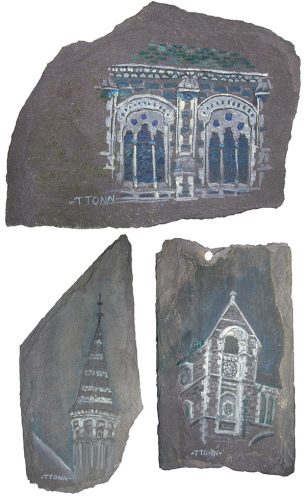
The Arts Centre
The university’s distinctive architectural style was established by renowned New Zealand architect Benjamin Woolfield Mountfort. The buildings are typical of the Gothic Revival period of architecture, a nineteenth-century style which attempted to revive the forms and details of the original Gothic style of the Middle Ages. Almost all of the buildings in the Arts Centre complex were in place by the time of the College’s 50th Jubilee in 1923, and their architectural unity is remarkable in view of the fact that they had been assembled gradually over the span of half a century. This was due primarily to architect Samuel Hurst Seager, who in 1913 persuaded the Board of Governors to accept his “grand design” for two quadrangles on either side of the new library, with the buildings linked by the arcades that have become a much-admired feature of the site. The College’s style was based on the Oxbridge model of academic buildings surrounding cloistered quadrangles.
In 1975, the university completed its move to the new Ilam campus in north-west Christchurch. After several years of debate about the future of the site, in 1978, the Arts Centre of Christchurch Trust was formed to hold the site and buildings in trust for the people of Christchurch and New Zealand.
Every Christchurch Arts Centre building was seriously damaged in last month’s earthquake, and it could cost $100 million to repair and rebuild the historic centre.
All the buildings are red-stickered, except for the 1960s registry building, but Arts Centre director Ken Franklin has vowed to rebuild the most valuable heritage buildings.
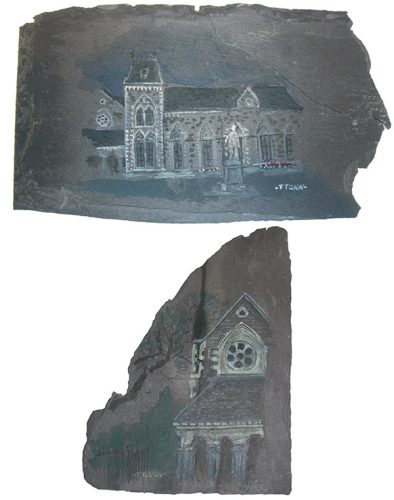
Canterbury Museum
The Canterbury Museum is a museum located in the central city of Christchurch, New Zealand in the city’s Cultural Precinct.
This small provincial museum was established in 1867 and has since grown in size to encompass New Zealand’s diverse natural and human heritage. The Museum has become a widely-renowned and an internationally-visited institution. The Museum has more than two million collection items and specialises in the stories of early Maori, European settlement and Antarctic exploration.
The original building is registered as a “Historic Place – Category I “ by the New Zealand Historic Places Trust.
The museum sustained some damage to its facade during the February 2011 Christchurch earthquake, but remains structurally sound. An estimated 95% of the collections were unharmed. The statue of William Rolleston, located at the front of the museum, toppled off its plinth during the quake. The museum was subsequently closed for an indefinite period.
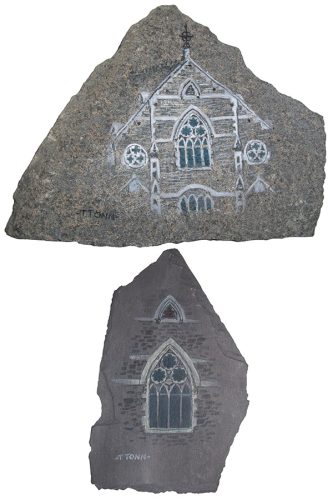
Sydenham Heritage Church
Sydenham Heritage Church, originally known as the Colombo Street Methodist Church, Colombo Street Wesleyan Church, or Colombo Road Wesleyan Church, was a heritage-listed stone church building in Sydenham, an inner suburb of Christchurch, New Zealand. It was registered as a “Historic Place – Category II “ by the New Zealand Historic Places Trust.
The building was designed in the Gothic Revival style in 1877 by the Melbourne architectural firm of Crouch and Wilson, who had earlier designed the Durham Street Methodist Church. Construction was supervised by local architect Thomas Lambert, and the building was officially opened in February 1878.
The building was purchased in 2001 by the newly formed Sydenham Heritage Trust with the help of a Christchurch City Council interest-free loan. Restoration and earthquake strengthening were ongoing activities of the trust.
The building was damaged in the February 2011 Christchurch earthquake. It was subsequently demolished by a demolition company without the knowledge or consent of the owners, and without authorization from the Historic Places Trust, the council archaeologist (who approves demolition applications) or the National Civil Defense Controller (who oversees earthquake responses). A police complaint has been lodged, and an enquiry into the unauthorised demolition is likely.
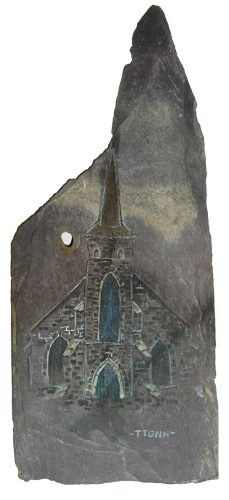
St. John’s Church
On Lyttelton’s Winchester Street stand three early stone churches, all of them important buildings in the development of church architecture in Canterbury. Trinity (Anglican) dates from 1859, St John’s Presbyterian from 1864 and St Joseph’s (Roman Catholic) from 1866.
St. John’s Presbyterian Church, designed by Architect Samuel Farr, originally was used for a dual purpose as the Lyttelton High School during the week and for worship at weekends.
The church was badly damaged in the February 2011 Christchurch earthquake.
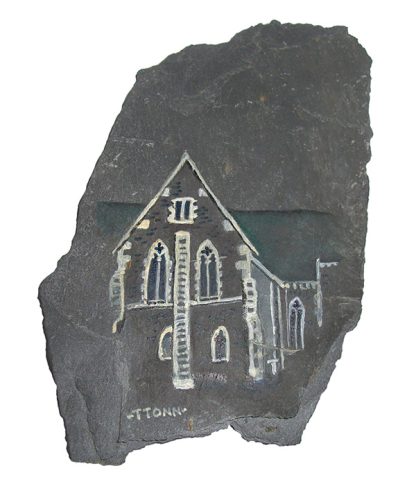
St Luke’s Anglican Cathedral
St Luke’s Anglican church has been a worshipping Christian community on Manchester Street, serving the people of Christchurch (New Zealand) since 1859.
St Luke’s is a place of stillness and peace, a place of prayer and contemplation for all. Life at St Luke’s is grounded in the proclamation of the Word, the celebration of the Sacraments, and caring companionship with each other.
Significant damage was sustained at St Luke’s Christchurch by the 7.1 earthquake that hit on the 4th of September.
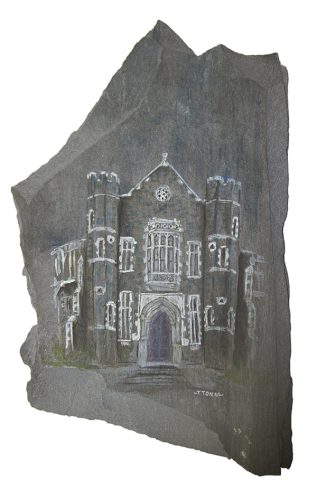
Peterborough Centre
Completed in 1930, the Christchurch Teachers’ Training College was designed in Gothic Revival style by George Penlington, the Canterbury Education Board Architect. The unstable ground, with a high peat content, caused the building to settle and crack within a year of construction. The training college had a close connection to the nearby Christchurch Normal School, later known as Cranmer Court. The Normal School provided a ‘normal’ school environment where since 1877, trainee teachers could observe their experienced peers in a teaching environment. The trainee teachers were based at the Normal School until the Teachers’ College Building was built for them.
Stewart Ross was the architect responsible for converting the school into the current Peterborough apartments, while Robert Douglas Brown was the developer. An underground car park was created in the courtyard as part of the conversion to apartments. The survey plans for the subdivision into individual titles are from 1998.
On 26 November 1981, the building was registered by the New Zealand Historic Places Trust as a Category II historic place, with the registration number 1914. The apartment conversion received a ‘Heritage and Conservation Award’ from the New Zealand Institute of Architects.
The building suffered significant damage in the 22 February 2011 Christchurch earthquake, with repairs estimated to cost NZ$12m, whilst the building is insured for NZ$12.3m. With most owners “committed to rebuilding”, the heritage building may be retained. The front entrance is red stickered (no access), while most individual units are yellow stickered (restricted access). Much damage was caused by the underground car park floating upwards due to liquefaction of the ground.
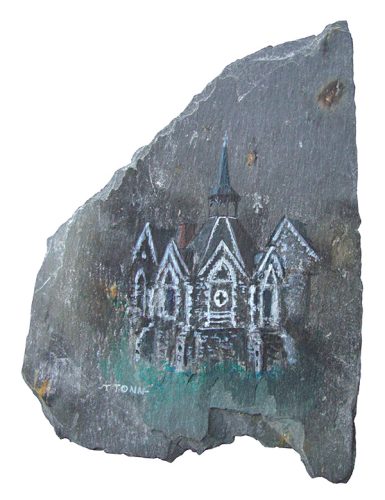
Normal School, Cranmer Square
This historic place was registered under the Historic Places Act 1980. This report includes the text from the original Building Classification Committee report considered by the NZHPT Board at the time of registration.
In April 1873, the Canterbury Board of Education held a design competition for a projected normal school. The winner was S.C. Farr (1827-1918), a Christchurch architect, with a revised Gothic design. When the Normal School was completed in 1874 at a cost of £14,269, the Montreal Street wing measured 145 ft. and the Kilmore Street wing, 244 ft. The builder was Daniel Reese and William Brassington (b. 1840), the carver of the stone details. In 1878, the Montreal Street wing was extended to provide a kindergarten on the ground floor and a training department on the first floor. The architect of the extension was Thomas Cane (1830-1905). In 1924-1925, the Teachers’ College students moved to a building on the corner of Montreal and Peterborough Streets. In 1954, the Normal School was transferred to Elmwood. The old school became the training centre for the Post-Primary Dept of Christchurch Teachers’ College. In 1970, they moved to Ilam, and the building became subject to neglect, vandalism and decay. In Sept. 1981, it was sold to an investment company and, between then and 1986, was converted to luxury apartments. The Board Room became a restaurant.
The old Normal School Building on the corner of Montreal and Kilmore streets collapsed. The building was being restored from the September 4th 2010, earthquake damage when the devastating February 22nd 2011, earthquake collapsed the corner tower section.
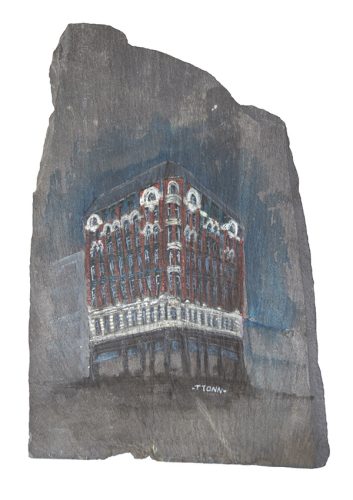
The Manchester Courts Building
This building was built for the New Zealand Express Company in 1905-1906 and at the time of its construction it was the tallest commercial building in Christchurch. The building was designed by Alfred and Sidney Luttrell, who arrived in New Zealand in 1902, and whose principal contribution to the history of New Zealand architecture was the introduction of the Chicago ‘skyscraper’. They were also noted for their use of concrete. The foundation and first two storeys of the New Zealand Express building are reinforced concrete. This was probably, according to Geoffrey Thornton, the first use of reinforced concrete in a commercial building in Christchurch.
Stylistically, this building is a compromise between British Edwardian architecture and the Chicago skyscraper style of the 1880s and 1890s. One example of this eclecticism can be seen in the corner tourelle, which was unusual in contemporary American architecture, but common within the English tradition. Technically the use of steel ties and standards, combined with the traditional brick masonry of the top five floors shows the same mix of sources. The ‘Chicago style’ was defined by the use of internal steel frames, which meant that the external walls were no longer load-bearing and therefore the height of the buildings could increase, and windows rather than masonry could dominate the exterior.
The building suffered irreversible damage during the massive September 4 earthquake and subsequent aftershocks, deeming it unsafe and demolition is underway.
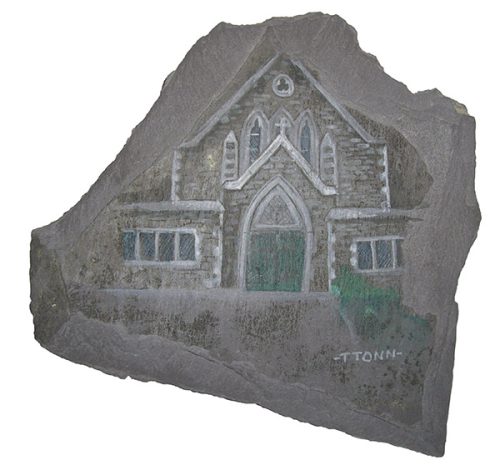
Holy Trinity Church, Avonside Drive
Holy Trinity Avonside is a heritage-listed Anglican church located in Linwood, Christchurch, New Zealand. It is registered as a “Historic Place – Category I” by the New Zealand Historic Places Trust. It was “damaged beyond the point of repair” in the February 2011 Christchurch earthquake.
The Parish of the Most Holy Trinity Avonside was established in 1855, with the first service held in the Rev. Charles Mackie’s home “Stricklands”. In 1857 a church building made of cob was consecrated. Architect Benjamin Mountfort, a parishioner, designed additions to the church including a bell tower and timber vestry in 1869. Around 1873, further Mountfort-designed additions included a stone chancel and transepts. In 1905 the original cob building was replaced by a stone nave designed by Mountfort’s son Cyril J. Mountfort. In 1953-1954 the west end of the church was extended, removing the remaining pre-1870s part of the building.
The church received damage in the 2010 Canterbury earthquake. Repairs were under way when the February 2011 Christchurch earthquake struck, the church building suffered major damage including collapse of the chancellery and most of the transepts. The church is “damaged beyond the point of repair”. Workers repairing damage on the inside of the 1876 Mountfort-designed part of the church were having lunch outside when this part of the building collapsed.
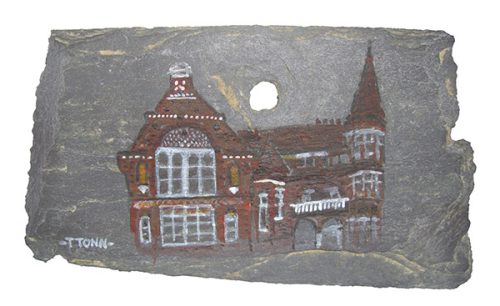
Municipal Chambers
Municipal Chambers, Oxford Terrace (Our City O-Tautahi) is the only building that has been purpose built for the Christchurch City Council. Every other building that has housed the Council has been an existing building modified to suit the Council’s requirements. This building was designed by local architect Samuel Hurst Seager and was erected on the cleared site of the old Land Office.
This distinctive “Queen Anne” style building at the corner of Oxford Terrace and Worcester Street was erected in 1887 as the former Christchurch City Council Chambers and functioned as the centre of local government until 1924. It remains in City Council ownership.
The building now provides an accessible space for the City Council and the people and communities of Christchurch to meet to present and exchange ideas and knowledge about the city and important development, environmental and social issues, as well as celebrate its life, colour and creativity. Our City O-Tautahi is a must-see for visitors and locals.
The earthquakes in Christchurch have caused substantial damage to the city. Our City O-Tautahi is closed until further notice.
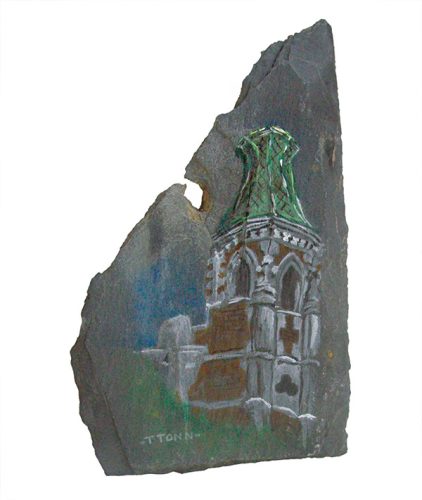
The Press Building
The Press Building, located in Cathedral Square in Christchurch, was the home of The Press between 1909 and February 2011. The building in perpendicular Gothic style is registered with the New Zealand Historic Places Trust as a Category I heritage item under registration number 302.
The Press was founded in 1861 by James FitzGerald in order to oppose the politics of his political rival, William Sefton Moorhouse.
The building was constructed using reinforced concrete, one of the first in Christchurch to utilise this technique, to support the weight of the printing presses.
The building was sold in 2008 to the Australian company Ganellen. The redevelopment plan was to build a new head office for The Press on an adjacent site in Gloucester Street, and the historic Press Building was to be refurbished as “an A-grade commercial building”.
The building was damaged in the 2010 Canterbury earthquake, and the company vacated the building on 8 September 2010. The building was certified for use again. It suffered significant damage in the 22 February 2011 Christchurch earthquake with the top floor collapsing; one employee died, several people were seriously injured and many staff were trapped in the rubble. The earthquake hit two weeks before staff were due to move into the adjacent new office building. The building is to be demolished.
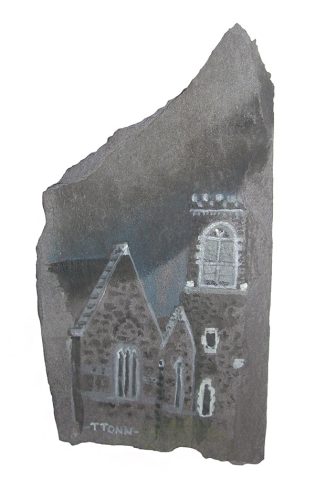
St Mary’s Merivale
The original wooden St. Mary’s Church, Merivale, Christchurch, was built in 1866. The new church was consecrated in 1926; it is the second on the site. The building was designed by Edmund Richardson Fitz Wilson. This solid stone Anglican church with its square, crenellated tower, serves the well-to-do parish of Merivale. At the rear of the nave, glance upward to the beautiful barrel-vaulted ceiling and across the rows of richly carved pews. The organ is one of the largest parish organs in the country, containing 2800 pipes. The church is decorated with a collection of exquisite stained glass windows. A booklet is available to guide you through the elements of each window.
The tower of St Mary’s Merivale was damaged in the September 2010 quake and then collapsed further in the February quake.
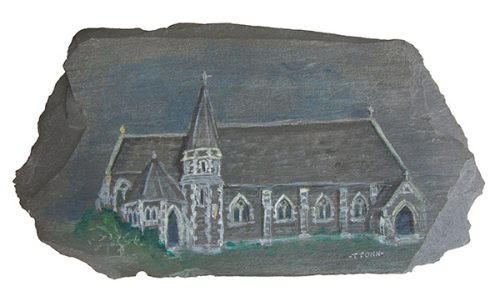
St James Church
The Church of St. James the Great, Riccarton Road, Christchurch, New Zealand, was built in 1923 to replace an earlier nearby wooden building that burnt down in 1921. Built in the Gothic style of so many of Christchurch’s churches, the building was designed by architects Alfred and Sidney Luttrell, Alfred being a local parishioner. Alfred Luttrell died at around the time the church was completed.
The building is actually brick; the facing of dark Halswell stone and cream Oamaru limestone is a veneer. The church features an 1880s organ and stained-glass windows by William Morris & Co., other English glassworks, and a more recent window by a local artist, Rena Jarosewitsch. The painted interior is in the medieval style and features heraldic shields on the roof trusses.
The Church was to be a memorial to those local men who had died in World War I.
The church did suffer damage in the earthquakes of 2010-11, but it was not severe and is repairable.
St Paul’s Trinity Pacific Presbyterian Church
St Paul’s Trinity Pacific Presbyterian Church stands on the corner of Madras and Cashel Streets, Christchurch. It provides a rich history from its foundation in the 1870s to the present day. It has witnessed many important beginnings, such as the early European settlement of Canterbury, the ongoing entry of Europeans into the city through the early 1900s and within the last 60 years, the important migration of Pacific peoples to Christchurch.
Its archives are held both locally and at the Dunedin Archives Research Centre. These consist mainly of parish registers, minutes of the Session and Parish Councils, minutes of the Board of Managers, and baptismal and marriage registers.
The building was damaged in the September 2010 Christchurch earthquake, and due to the February 22nd earthquake, the building restoration project has been terminated because of the extensive damage.
Christchurch Heritage Hotel OGB
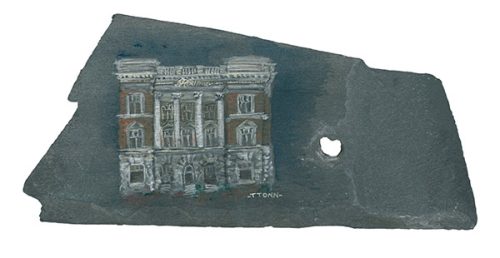
Christchurch Heritage Hotel OGB (Old Government Building)
The Government Buildings opened in 1913 and housed various Government departments for more than seventy years. Following this, the building remained empty for several years and, in 1991, it was threatened with demolition, prompting the Christchurch City Council to purchase it. It was then sold for preservation and meticulously restored; it is now part of the Heritage Hotel complex.
The building was designed in the style of an Italian High Renaissance palazzo. In keeping with this model, it has a massive box-like shape and a heavily rusticated stone base topped by walls with regularly placed windows, and a boldly modelled cornice. The entrance on the west facade is surmounted by a portico in antis (that is, a portico whose columns range with the front wall), while the entrance on the north side is topped by four columns which project slightly from the building. The central staircase, spacious corridors and the door surrounds topped with triangular pediments are notable features.
The Old Government Building carries a Historic Place – Category I listing.
Following the February 22nd earthquake, Heritage Christchurch is not taking bookings for the OGB Wing until 1st July 2012. A date for the Tower Wing is not yet available.
A cordon remains in place around the CBD area, and as such, this date is contingent on the lifting of access restrictions.
Bridge of Remembrance
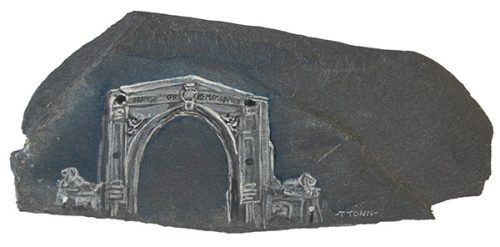
The Bridge of Remembrance is one of two main war memorials in Christchurch, New Zealand. It is dedicated to those who died in World War I, and serves as a memorial for those who participated in two World Wars as well as subsequent conflicts in Borneo, Korea, Malaya, and Vietnam. Owned by Christchurch City Council, it is located on the Cashel Street Bridge at the head of City Mall.
The archway was built over the east end of the Cashel Street bridge linking Oxford and Cambridge Terraces across the Avon River. It became a pedestrian precinct on Anzac Day (25 April) in 1977. East of it is the business district and the main pedestrian mall. In the area between the bridge and Victoria Square are the Floral Clock, Law Courts, Canterbury Provincial Council Buildings, Our City and the Scott Statue.
The idea of building a Bridge of Remembrance was first raised in a letter to The Press on 24 July 1919, written by Mrs Wyn Irwin. The suggestion found support from the public. Construction began on 23 January 1923. The cornerstone was laid by Lord Jellicoe, Governor-General and Admiral of the Fleet, on Anzac Day, 25 April 1923, when Archbishop Churchill Julius invoked the religious blessing.
The memorial was unveiled on 11 November 1924, Armistice Day, by Lord Jellicoe. From King Edward Barracks, further west on Cashel Street, soldiers crossed the Avon River at this location and marched to the railway station on Moorhouse Avenue to fight in three wars. Stage 1 of the bridge’s refurbishment occurred in 1989, Stage 2 began two years later, and was completed in 1992, with a commemorative plaque dedication ceremony held on 21 June.
The bridge was closed to motorised traffic in 1976, several years before the adjacent Cashel Street was closed to vehicular traffic (on 11 January 1982).
In February 2011, it was targeted by vandals who sprayed it with graffiti. Only a fortnight later, the February 2011 Christchurch earthquake struck, damaging the arch. Permanent repair and earthquake strengthening are estimated to cost over NZ$2m. Christchurch City Council initially considered placing a temporary steel structure around the arch, but at NZ$430,000, it has since dismissed the idea as too expensive. The Returned Services’ Association expressed dismay at the decision not to go ahead with the temporary work, citing fears of losing the heritage structure altogether in another strong aftershock.
Theatre Royals – Grand Old Lady of Christchurch
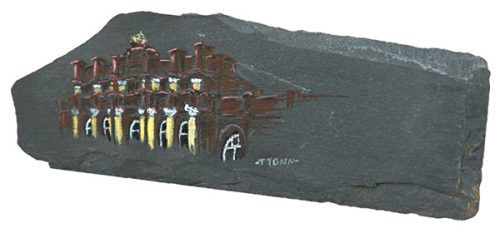
There have been three Theatre Royals in Christchurch. The first was a wooden building opened in Gloucester Street in 1863, over the road from the present building. Originally called the Canterbury Music Hall, it later became the Royal Princess Theatre and then, after refurbishment, the Theatre Royal. It served for many years, but a better facility was wanted, so it was replaced on the same site with a new building, also made of wood. It opened on 4 November 1876, and operated for several decades until plans for a bigger theatre were hatched.
The third Theatre Royal was opened in February 1908 with a performance of “The Blue Moon” by the Williamson Musical Comedy Company. The house was packed. It was owned and managed by the mighty J.C. Williamson Theatres Limited, which was a theatre company operating in Australia and New Zealand in the 1900s. It was owned by James Cassium Williamson, an American actor who first arrived in Australia in 1874.
When work on the third incarnation began on 20 November 1906, the Christchurch Press confidently stated that the building would be ‘one of the most modern and comfortable south of the line’. In 1928, the Royal underwent a major upgrade, partly with a view to screening films.
Mercifully, our Grand Old Lady of Christchurch Theatre has survived the massive earthquake and considerable aftershocks that have rocked the city over the last year. After thorough inspections by structural engineers, she is structurally sound and well on the way to repair, with the current target of January 2013 for reopening.
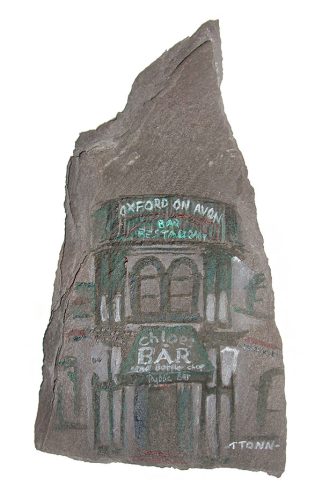
Oxford on Avon
The Oxford Hotel, built in April 1850 on Public Reserve No.1, was the Canterbury Association’s store. In 1853, the adjacent Christchurch Common became Market Place, and the Association’s store was in use as a hostel for the Māori bringing produce from Kaiapoi, Rapaki and Port Levy to the weekly farmers’ markets. By the beginning of the 1860s, the former store was being used as the United Methodist church’s meeting hall.
The twelve-year-old store building was replaced in 1862 by the Boarding House by Antill Alfred Adley. Adley had been granted a Publican’s Licence by 1865, and his premises became the sixth hotel to overlook the marketplace. The tall entrance to the Left led through to the stables and a small paddock on what would become the site of the city’s third fire station in 1876.
Adley sold his hotel in 1873, and by 1881, the shingled-roofed wooden building had been replaced by the current premises.
After undergoing substantial modification in 1978, the old hotel became known as the Oxford Tavern. Now known as the Oxford on Avon, it houses two bars and a pair of popular restaurants
The 125-year-old Oxford-on-Avon is badly damaged, and the restaurant/cafe will not reopen.
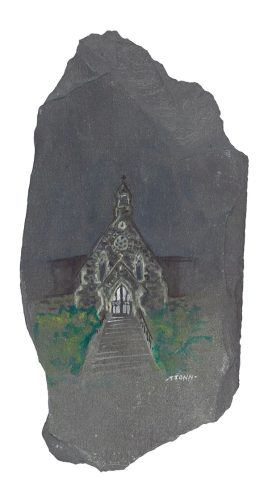
St. Joseph’s Catholic Church
St. Joseph’s Catholic Church was opened on 14 July 1865. Like St. John’s, it was built from locally quarried stone. It is registered as a “Historic Place – Category II”.
Back in 1865, it would have been considered an outrage to comment on two different churches, the homes of two very separate denominations, in the same sentence. They represented two very different sectors of Lyttelton’s population; both were ‘lighthouses’ for their own religious culture in the predominantly Anglican See! At one end of Winchester Street was St. John’s ‘Kirk’, home to a very Scottish congregation; at the other end was St Joseph’s, a Roman Catholic Church home to those of mainly Franco-Irish origins.
The ‘Lyttelton Times’ 19th January 1865 recorded that Messrs Graham and Weybourne had been awarded the contract to build St. Joseph’s Church for 1200 pounds, having just completed the Presbyterian Church. St. Joseph’s Church was designed by architects Messrs Mountfort and Bury to accommodate 400 people, with Messrs England Brothers furnishing the woodwork and interior fittings.
By 1878, St. Joseph’s schoolroom was built to the left of the church; 1921 saw a brick schoolroom built behind the church at a cost of 1500 pounds. This was replaced in 1983 by the present school. The church was extended in 1941 and the interior altered in the 1960’s.
St Joseph’s Catholic Church was badly damaged on February 22nd, 2011. Demolition crews were expected to start clearing the site in September 2011.
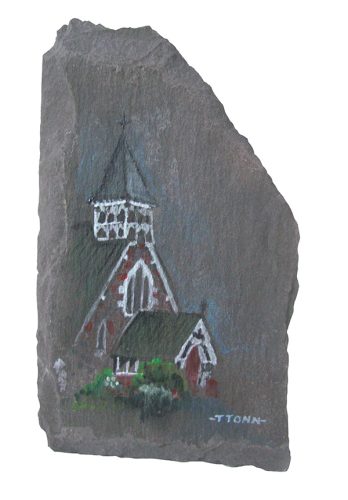
Holy Trinity Anglican Church
The Anglicans had a bad start in Lyttelton as their first church, designed by architect Benjamin Mountford, had to be demolished because the green timber shrank so much that the building became a hazard.
The second attempt, completed in 1860, produced a stunningly beautiful result visible today. It is built of rather colourful grey-to-reddish volcanic rock, with a little white wooden bell spire sitting atop the roof, giving it a fragrant and joyful aspect.
The historic stone churches of Lyttelton have fared as badly as the historic stone churches in Christchurch Central. This one was badly damaged in the 22nd February quake, but is still standing. Quakes on 13 June, 2011, measuring 5.7 and 6.0, have obliterated the church.
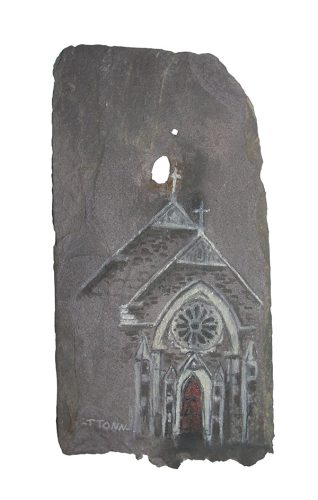
The Rose Historic Chapel
The Rose Historic Chapel, formerly known as the St Mary’s Convent Chapel, is a heritage-listed stone church building located in Colombo Street in Christchurch, New Zealand. It is registered as a “Historic Place – Category II “ by the New Zealand Historic Places Trust. The building was designed in the Gothic Revival style and erected in 1910.
While the convent buildings were sadly demolished in 1994, the chapel was purchased by the Christchurch City Council in order to ensure its retention. Together with the Rose Historic Chapel Trust and Friends of the Chapel, the Council has undertaken conservation and restoration of this building for its new use as a community facility catering specifically for intimate weddings, meetings, seminars and concerts.
The Chapel was badly damaged in the magnitude 6.3 earthquake that hit Christchurch on 22 February 2011.
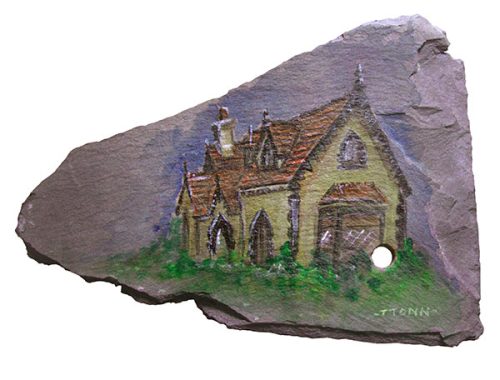
Mona Vale Gatehouse
The homestead set in the grounds of Mona Vale was built in 1897 for Frederick Waymouth, Managing Director of the Belfast Freezing Works. The house and lodge were designed by prominent Christchurch architect J C Maddison. Named “Kawera” by the Waymouths, the property was purchased by Annie Townend in 1905 and renamed “Mona Vale”.
Annie Townend continued to develop the extensive grounds and built the gatehouse at the Fendalton Road entrance to the property. Mona Vale has had a number of owners over the years, and in 1969, after public outcry at the possibility that the area would be developed, it passed into public ownership.
Today, the grounds, maintained by the Council, are open to the public, and the homestead has been converted into a function centre.
During the Christchurch 2010-2011 earthquakes, Mona Vale Gatehouse suffered major damage to the roof, interior, and two of its chimneys collapsed.
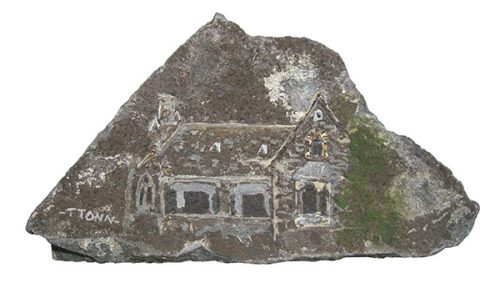
Canterbury Provincial Chambers
The Canterbury Provincial Council Buildings are the only purpose-built provincial government buildings still in existence in New Zealand.
This small cluster of historic buildings in central Christchurch is treasured by the city, both for its historical importance and its beauty.
Canterbury Provincial Council Buildings (1858 to 1865) were designed by Benjamin Mountfort, Canterbury’s leading Gothic Revival architect. Although the style of the buildings looks back to Europe, they also declare their pride of place with the use of local stone and timbers.
They sit beside the meandering Avon River, telling the story of Christchurch’s early European settlement.
The Timber Chamber, the Stone Chamber and their connecting corridors are closed to the public due to damage from the Canterbury Earthquakes.
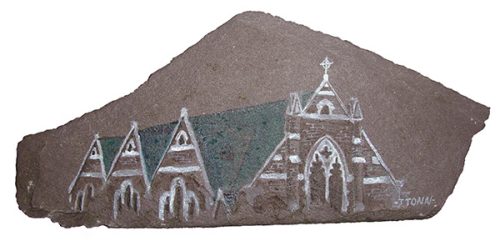
Knox Church
This imposing brick church, known as “The Cathedral North of the River”, is the headquarters of Canterbury Presbyterianism. Its cavernous interior is finished in dark timber panelling with a soaring timber-framed roof supported by a forest of carved timber pillars. The sombre architecture of the Knox Church is offset by a beautiful stained-glass window, creating a very appealing view. You can also view a blue-braided river flowing down from the mountains across the plains.
The Church is badly damaged, its walls are broken. It is repairable and able to be rebuilt using the remaining wooden frame.
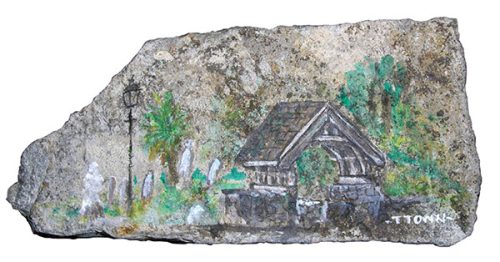
Barbadoes Street Cemetery
The final resting place of many of Christchurch’s early leading citizens is the Barbadoes Street Cemetery, the city’s oldest, first opened in 1851. The cemetery itself is divided by Barbadoes Street, separating the Anglican (Church of England) section, on the eastern side, from the Roman Catholic and Dissenters (others) section on the west. The history of the cemetery is the history of early Christchurch. The stories of its beginnings and the people buried there paint a rich and varied panorama of the life lived in the 19th century and into the last century.
In the early 1990s, a roofed structure known as a lych-gate was at the Cambridge Terrace entrance to the cemetery. Lych-gate is a term adopted in Victorian times and derived from the Old English “lich” meaning corpse. It was the requirement in the 1549 Prayer Book that the priest, “metying the corpse at the church style” should commence the Order for the Burial of the Dead at this entrance-way which encouraged the construction of shelters for that purpose. Sometimes the cortege had to await the arrival of the parson for some time, and the provision of a lych-gate provided a sheltered place for bearers who often had to carry the shrouded body for some distance over rough tracks. Generally, coffins were only available to the more affluent members of society. Many lych-gates have coffin stones or coffin stools in the middle of the gateway on which to rest the coffin whilst awaiting the priest’s arrival. Bench seats were often incorporated in the construction for the comfort of the waiting bearers.
A big part of the stone retaining wall and some tombstones at the Barbadoes Street Cemetery on Cambridge Terrace collapsed during the magnitude 6.3 earthquake that ripped through Christchurch on 22 February 2011.
It has been an absolute privilege to have had the opportunity to work on this collection. My thanks to all those who have shown their support and helped me to make this collection possible.